Why Dental Crowns Matter After Large Fillings
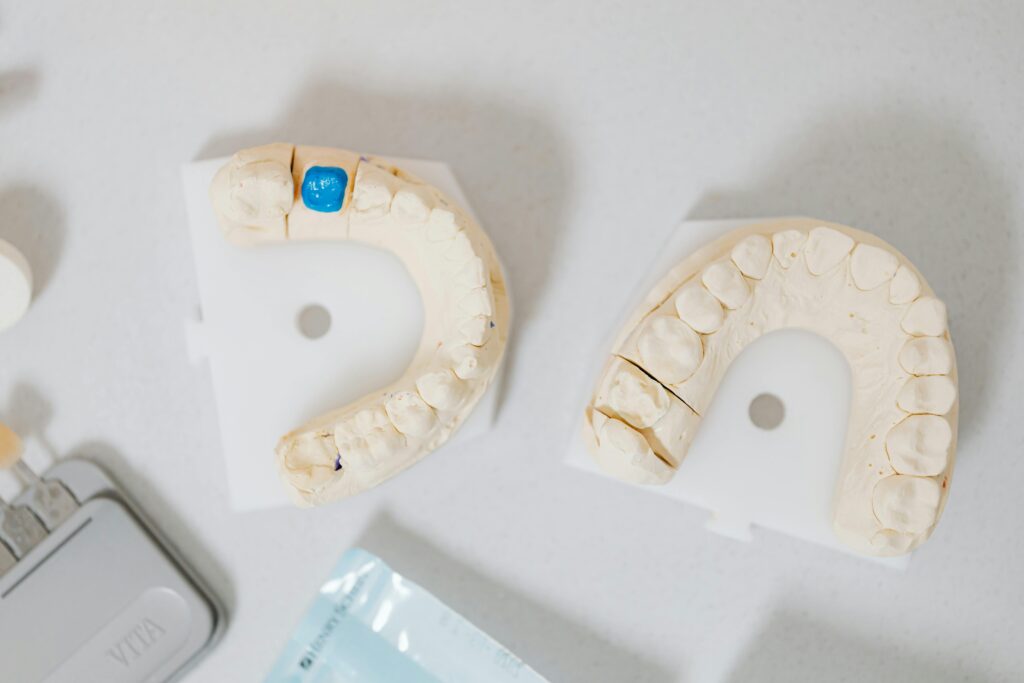

A small filling and a large filling do not leave a tooth in the same condition.
That sounds obvious, but it often gets lost in the way people think about dental treatment. Many patients see a filling as a repair that returns the tooth to normal. Sometimes it does. A modest cavity caught early can often be treated with a Dental Crowns conservative filling, and the tooth may remain strong for years with routine care. The picture changes when decay, fracture, or replacement of old dental work removes a substantial amount of natural tooth structure. At that point, the question is no longer just how to close a hole. The question is how to keep the tooth from breaking under the pressure of everyday use.
That is where Dental Crowns become so important.
In practice, some of the most preventable dental emergencies begin with a tooth that had a very large filling and no full coverage protection. The patient feels fine for months, sometimes for years. Then one morning a corner shears off while eating toast, or a deep crack develops after chewing on something ordinary. The tooth that seemed stable suddenly becomes painful, or worse, becomes impossible to restore without root canal treatment or extraction. It is not always dramatic. Sometimes the fracture is small at first, hidden under the old filling, quietly spreading with each chewing cycle until it reaches the nerve.
A crown is not just a bigger filling. It serves a different mechanical purpose. After a tooth has lost a large amount of structure, a crown helps hold what remains together and distributes biting forces in a way a filling often cannot. That distinction matters more than many people realize.
A large filling changes the way a tooth handles force
Natural teeth are remarkably strong, but they are not indestructible. Their strength comes from shape as much as material. Enamel forms a protective shell. Dentin underneath has a bit more flexibility. Cusps, grooves, and ridges work together like the architecture of a building. When decay or an old restoration removes a large portion of that framework, the tooth loses more than material. It loses engineering.
This is especially true in back teeth. Molars and premolars absorb significant force during chewing. Estimates vary depending on the person and the situation, but it is not unusual for bite forces in the posterior mouth to reach well over 100 pounds, and sometimes much more during clenching or grinding. A tooth with a small filling can usually tolerate that load because most of its walls remain intact. A tooth with a large filling may have thin cusps and weakened margins, almost like a house with major support beams cut back.
When a dentist removes decay, the goal is to preserve as much healthy structure as possible. Even with excellent technique, though, a large cavity means a large loss. The more the filling spreads across the chewing surface or between the cusps, the more those cusps tend to flex under pressure. Over time, that repeated flexing can produce cracks. At first the patient may notice occasional sensitivity when biting. Later, the tooth may fracture outright.
I have seen this pattern often enough that certain stories repeat themselves. A patient will say, “It was just a filling, I did not think the tooth was that weak.” The filling may have looked intact from above, but the remaining natural tooth around it was doing very little safely.
Why fillings and crowns are not interchangeable
Fillings and crowns both restore teeth, but they solve different problems.
A filling replaces missing material in part of the tooth. It works best when enough healthy tooth remains to support normal function. Modern filling materials can be excellent, especially bonded composites, and in many cases they are the right choice. They are conservative, cost less upfront, and preserve more natural structure during the procedure.
A crown covers the visible portion of the tooth and reinforces what is left. Think less in terms of plugging a defect and more in terms of bracing a weakened shell. The crown does not make a dead or badly compromised tooth immortal, but it gives a heavily restored tooth a better chance to withstand years of biting and temperature changes.
The difference becomes clear when you look at teeth with wide, deep restorations. A filling depends on the surrounding tooth walls remaining stable. A crown protects those walls from splitting apart. When a tooth already has a large filling, or needs one so extensive that little original tooth remains, choosing another filling alone can become a short-term fix for a long-term structural problem.
This is one reason dentists often recommend crowns after root canal treatment on back teeth. Those teeth are frequently already weakened by decay, previous fillings, and the access needed for treatment. The issue is not simply that the nerve has been removed. The issue is that the tooth structure left behind may be less able to tolerate daily stress.
The hidden risk of “it feels fine”
One of the hardest conversations in dentistry involves a tooth that does not currently hurt.
Patients are understandably skeptical when they hear they need a crown on a tooth that feels normal. Pain is a poor measure of structural integrity. Teeth can be fragile without being painful. A tooth may be one hard pretzel away from losing a cusp and still have no ache at all.
This is where clinical judgment matters. Dentists look at how much of the tooth is filling versus natural structure, where the restoration extends, whether there are visible cracks, whether the cusps are thin, how the bite lands on the tooth, and whether the person clenches or grinds. X-rays help, but they do not show every crack or every area of weakness. Experience fills in part of that gap. A dentist who has watched similar teeth fail over time recognizes warning signs that patients cannot see.
There is also a timing issue. Restoring a tooth with a crown before it fractures is usually simpler, more predictable, and less expensive than waiting for it to break. Once a fracture travels below the gumline or into the root, the treatment options narrow quickly. What could have been a planned procedure may become an emergency visit, root canal treatment, crown lengthening, or extraction and implant planning.
Preventive treatment is often a difficult sell because it asks people to act before a crisis. Yet much of good dentistry is exactly that, managing risk before damage becomes irreversible.
What dentists mean by a “large filling”
There is no single measurement that defines a large filling. Dentistry is not that tidy. Still, several patterns raise concern.
When a filling spans a significant portion of the chewing surface, especially if it extends into one or both sides of the tooth, the remaining cusps become more vulnerable. If an old silver amalgam or large composite has been replaced multiple times, each replacement usually requires removing a little more tooth. If the filling is deep and close to the nerve, the tooth may also become more sensitive to thermal changes and internal stress.
In practical terms, a filling becomes “large” when the tooth no longer behaves like an intact tooth. That can happen because of size, depth, position, previous treatment history, or the way the person bites. A smaller restoration in a heavy grinder may be riskier than a slightly larger one in someone with a gentle bite. Likewise, a premolar with steep cusps can fail sooner than a broader molar under the same restorative burden.
Dentistry is full of these judgment calls. There are guidelines, but there is also anatomy, age, bite force, diet, saliva, decay risk, and patient habits. A recommendation for a crown should make sense in the context of all of those variables, not just one X-ray.
Cracks often start where patients never see them
A great many fractured teeth do not begin with a dramatic event. They begin quietly.
The chewing surface may show a large old restoration with stained margins or fine craze lines. Underneath, the tooth may already be separating microscopically. Every day, hot coffee expands materials differently than ice water. Every meal applies cyclical force. Night grinding adds repeated pressure in directions teeth were not designed to handle continuously. Small defects deepen. A cusp flexes a little more. Adhesive bonds age. Eventually the tooth gives way.
The frustrating part is that the break often occurs at the worst possible moment, during travel, before a holiday, on a weekend, or just after the patient postponed treatment because “it was not bothering me.” Dentists see enough of these cases that recommendations for crowns after large fillings are rarely abstract. They come from having restored too many teeth after preventable fractures.
Not every heavily filled tooth needs a crown immediately. That would be too simplistic. Some can function for years without one. But when the anatomy is compromised enough, waiting is a gamble, and the odds do not always favor the tooth.
What a crown actually does for the tooth
A well-made crown wraps the prepared tooth in a way that reduces the risk of cuspal fracture. It helps unify the remaining structure so biting forces are shared more evenly. On a cracked or heavily restored tooth, that can mean the difference between a stable restoration and a tooth that continues to split.
The benefits usually include the following:
- Better protection for weakened cusps and thin tooth walls.
- More predictable long-term support after very large fillings.
- Reduced chance of catastrophic fracture in many high-risk teeth.
- Improved function when the original tooth shape has been badly compromised.
- A chance to restore the tooth before a deeper crack reaches the nerve or root.
These points are general, not guarantees. Crowns can fail, leak, loosen, chip, or eventually need replacement. They still rely on sound diagnosis, proper preparation, a healthy foundation, and good home care. But in the right tooth, they change the long-term outlook substantially.
When a crown is especially worth considering
Certain clinical situations make the case for crown coverage much stronger.
If a tooth has had root canal treatment and sits in the back of the mouth, the need is often high because the tooth is expected to handle heavy chewing forces with reduced structural reserve. If a large portion of one or more cusps has already broken away, full coverage becomes less of a preference and more of a reinforcement strategy. If there is recurrent decay under a broad old filling, removing the decay may leave too little reliable structure for another direct filling.
Patients who grind their teeth at night deserve special mention. Bruxism changes the equation. A tooth that might survive for years in one person can crack quickly in someone who clenches with significant force. In those cases, a crown may be paired with a night guard to protect both the restoration and the rest of the dentition.
There are also cosmetic and functional situations where a crown makes sense because the tooth shape, contact areas, or bite need more complete rebuilding than a filling can provide. That is not purely about appearance. Contours affect flossing, gum health, and how food packs between teeth.
Why some patients hesitate, and why that hesitation is understandable
Crowns cost more than fillings. They usually require more than one step, though same-day systems exist in some offices. The tooth must be reshaped to receive the crown. Temporary restorations may be involved. Insurance coverage can be uneven. Some patients have had poor experiences in the past, or they know someone whose crown had to be redone.
Those concerns are legitimate.
Good treatment planning means weighing the immediate cost and effort against the future risk of fracture, pain, and more complicated care. A crown is not automatically the right answer just because a filling is large. There are cases where a bonded onlay or partial coverage restoration may preserve more tooth and still provide excellent protection. There are also cases where the remaining tooth is too compromised for a predictable long-term result even with a crown, and alternatives should be discussed honestly.
The goal is not to sell the biggest restoration. It is to match the restoration to the tooth’s structural reality.
That is why a thoughtful dentist may explain not only what they recommend, but what they are trying to prevent. “I am concerned this cusp will split.” “This crack line may worsen.” “If we place another filling, we will be asking thin walls to carry too much load.” Those are concrete reasons, not generic upselling language.
Crowns are not all the same
Patients sometimes hear “crown” as though it were one standard product. In reality, crown design and material choice vary.
Some crowns are all ceramic and offer excellent esthetics, which matters more in visible areas. Others may use stronger materials suited to high-load situations. The best option depends on the tooth’s location, the amount of remaining structure, the bite, esthetic priorities, and whether there is enough clearance between upper and lower teeth.
Fit matters at least as much as material. A beautifully marketed crown with poor margins or a poorly managed bite can fail early. The surrounding tooth and gum tissue need to be healthy. If the tooth has very little remaining core, additional buildup may be required, and sometimes a post is used in root canal treated teeth to help retain that buildup. Even then, the post does not strengthen the tooth by itself. That is a common misunderstanding. The protective effect comes mainly from the ferrule and the crown’s ability to brace the tooth properly.
These details are one reason crown success rates vary from person to person and office to office. Technique, planning, and maintenance matter.
What the treatment process is usually like
For people who have never had one, the idea of a crown can sound more daunting than it usually is. In most cases, the dentist numbs the tooth, removes any weak or decayed structure, builds the foundation as needed, and shapes the tooth for the crown. An impression or digital scan is taken. A temporary crown may be placed if the final one is being made in a lab. At the delivery visit, the final crown is checked for fit, contacts, color when relevant, and bite.
Some offices fabricate crowns in-house on the same day. That can be convenient, though convenience should not outrank proper case selection and fit. A carefully made laboratory crown can be an excellent option, especially in complex cases.
After placement, the tooth and surrounding gum may feel slightly tender for a short period. Bite adjustment is important. A crown that is a little high can create soreness, sensitivity, or excessive stress on the tooth and jaw. When patients mention that the bite feels off, it is worth checking rather than hoping it will settle.
Aftercare is simpler than most people think
A crown does not need exotic maintenance, but it does need respect. The margin where crown meets tooth must be kept clean. Decay can still develop there if plaque control is poor or diet is highly cariogenic. Gum inflammation around a crown can also shorten its lifespan.
The basics are familiar, but they matter:
- Brush thoroughly along the gumline, not just the top of the crown.
- Floss or clean between teeth daily, especially around crown margins.
- Avoid using teeth to crack hard objects or open packaging.
- Wear a night guard if you clench or grind.
- Return for exams so small issues are caught before they become big ones.
None of this is dramatic. That is the point. Long-lasting dentistry often depends more on steady habits than heroic procedures.
The trade-off most patients are really making
When deciding between replacing a large filling with another filling or moving to a crown, the choice is rarely about today alone. It is about what kind of risk the patient is willing to carry into the next five to fifteen years.
Another filling may preserve more tooth in the short term and cost less now. In the right tooth, that can be entirely reasonable. But if the tooth is already structurally compromised, that approach may also leave it vulnerable to fracture. A crown asks for more investment upfront, but often buys a better margin of safety.
There is no shame in asking hard questions here. How much healthy tooth is actually left? Are there visible cracks? What happens if we wait? Is an onlay an option? How would grinding affect the prognosis? What if the tooth breaks later, what treatment paths might that open or close?
Those are practical questions, and a strong clinician should be able to answer them clearly.
Why timing matters more than people expect
One of the biggest advantages of timely crown treatment is not just tooth protection. It is preserving options.
A tooth that receives a crown before it fractures deeply may stay straightforward. The same tooth, if left unsupported, may later require a root canal because the crack irritates or infects the pulp. If the fracture extends too far, the tooth may become unrestorable. At that stage, the conversation shifts from protecting a natural tooth to replacing a missing one, often with far greater biological and financial cost.
Natural teeth are worth preserving when they can be preserved well. Not at any cost, and not through endless patchwork on a failing foundation, but through realistic, timely treatment that respects how teeth function under load. Dental Crowns are often part of that realism. They acknowledge that once a tooth has lost enough structure, pretending it is still “just a filling tooth” can be an expensive fiction.
A large filling is a sign that the tooth has already been through a lot. The crown is not a punishment for that history. It is often the step that gives the tooth its best chance to keep serving quietly, comfortably, and without surprise.
Omni Dental Specialty
1690 E Gonzales Rd, Oxnard, CA 93036, United States
+1 805-410-9603
FAQ About Dental Crowns
How long do crowns last on teeth?
A dental crown often lasts about five to fifteen years, although some last longer. Material, the underlying tooth, oral hygiene and grinding habits affect longevity. Regular dental examinations help identify wear, decay or a loose crown; no lifespan is guaranteed.
How much does a tooth crown cost?
There is no single price for every crown. Material, laboratory work, the condition of the tooth and any additional treatment affect the fee. Ask for a written estimate and confirm your insurance benefits, exclusions and out-of-pocket costs before treatment.
What is the downside of crowns on teeth?
A conventional crown usually requires irreversible removal of some tooth structure. Possible problems include sensitivity, chipping, loosening and decay at the crown margin; some teeth later need root canal treatment. Discuss your tooth's condition, material choices and suitable alternatives with your dentist.